What Is Solar Panel Degradation (and How Does It Work)?
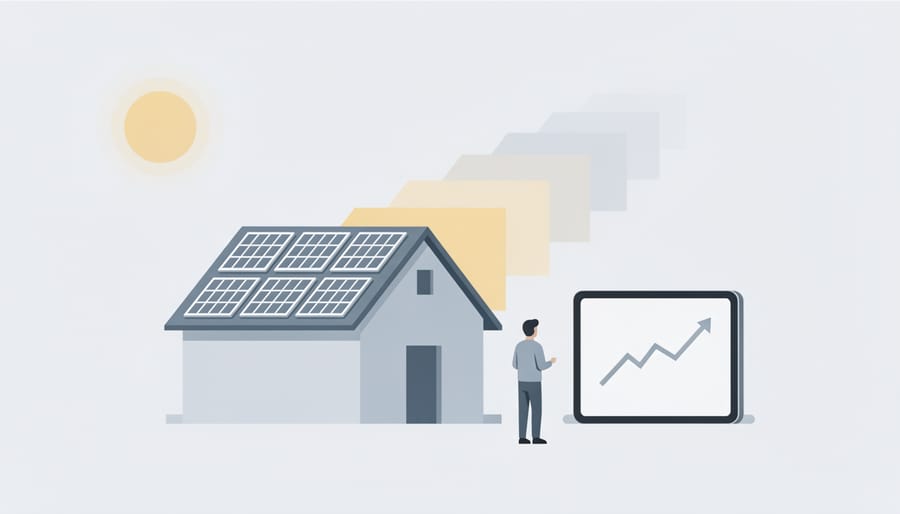
Solar panel degradation is the gradual loss of efficiency that occurs as photovoltaic cells age, typically measured as a percentage decline in power output per year. While it might sound concerning, modern solar panels degrade at remarkably slow rates, usually around 0.5% to 0.8% annually, meaning your system will still produce roughly 85% to 90% of its original output after 25 years of operation.
Understanding degradation matters because it directly affects your long-term return on investment and energy independence goals. When you’re making the decision to invest in solar technology, knowing that your panels won’t maintain peak performance forever helps you set realistic expectations for energy production and financial savings over the system’s lifespan.
The degradation process happens through several mechanisms. Exposure to ultraviolet radiation, thermal cycling between hot days and cool nights, humidity infiltration, and mechanical stress from wind and snow loads all contribute to microscopic changes in the solar cells and surrounding materials. These aren’t defects or failures. They’re natural consequences of operating in outdoor conditions year after year.
This article breaks down what causes solar panels to degrade, explores the different types of degradation you might encounter, and explains how manufacturers design systems to minimize performance loss. You’ll learn what degradation rates to expect from current solar technology, how to spot potential problems before they accelerate wear, and practical steps to protect your investment. The goal is to give you confidence that solar remains a reliable, durable choice for clean energy, even as your panels gradually age.
What Is Solar Panel Degradation?
Solar panel degradation is the gradual, predictable decrease in a solar panel’s ability to convert sunlight into electricity over its operational lifetime. Think of it like a car that slowly loses fuel efficiency as it ages, your panels will still generate power for decades, but they’ll produce slightly less each year than they did when brand new.
This performance decline is perfectly normal and happens to all solar panels, regardless of brand or quality. It’s not a defect or failure; it’s simply the result of materials being exposed to the elements day after day for 25 to 30 years or more. The photovoltaic cells inside your panels experience microscopic physical and chemical changes from constant exposure to sunlight, temperature swings, moisture, and weather conditions.
The degradation rate, expressed as a percentage per year, tells you how much efficiency your panels lose annually. Most modern high-quality panels degrade at around 0.3% to 0.5% per year. A panel that starts at 100% efficiency and degrades at 0.5% yearly will still operate at roughly 87.5% of its original capacity after 25 years. That means a 400-watt panel would produce around 350 watts after a quarter century, still substantial, usable power.
- Degradation Rate
- The annual percentage decline in a solar panel’s power output, typically ranging from 0.25% to 0.8% per year depending on technology and quality.
- Nameplate Capacity
- The manufacturer’s rated power output of a solar panel under standard test conditions, representing the panel’s maximum power when new.
- Performance Ratio
- The actual energy output of a solar system compared to its theoretical maximum under real-world conditions, accounting for degradation and other losses.
- Warranty Degradation
- The maximum performance decline a manufacturer guarantees won’t be exceeded over specific timeframes, typically 90% at 10 years and 80-85% at 25 years.
- LID (Light-Induced Degradation)
- The initial rapid efficiency loss that occurs when crystalline silicon panels are first exposed to sunlight, usually stabilizing within the first few days of operation.
Understanding these terms helps you evaluate solar proposals and set realistic expectations. When a manufacturer promises “0.4% annual degradation,” they’re telling you their panels will maintain better long-term performance than competitors with higher rates. This directly affects your energy production and financial returns over the decades you’ll own your system.
How Solar Panel Degradation Works
Light-Induced Degradation (LID)
Light-induced degradation represents a unique phenomenon that occurs when crystalline silicon solar panels first encounter sunlight. Within the initial hours of operation, these panels experience a rapid but temporary decline in efficiency, typically losing 1-3% of their rated power output. This initial drop happens faster than any other degradation process you’ll encounter.
The culprit is a reaction between oxygen atoms and boron dopants within the silicon cells. When photons strike the panel, they activate oxygen-boron complexes that create defects in the crystal structure, reducing the cell’s ability to convert light into electricity. Think of it as the panel adjusting to its working environment.
Here’s the reassuring part: LID stabilizes quickly. Most panels complete this initial degradation within the first 48-72 hours of sun exposure, and the performance loss stops there. Manufacturers account for LID in their specifications, so your panel’s rated output already reflects this early decline. Modern PERC and passivated cell technologies have largely minimized LID through improved manufacturing processes and alternative dopants like gallium, which resists this initial reaction. Some premium panels in 2026 experience less than 1% LID, making this once-significant concern increasingly negligible for new solar installations.
Environmental and Thermal Stress
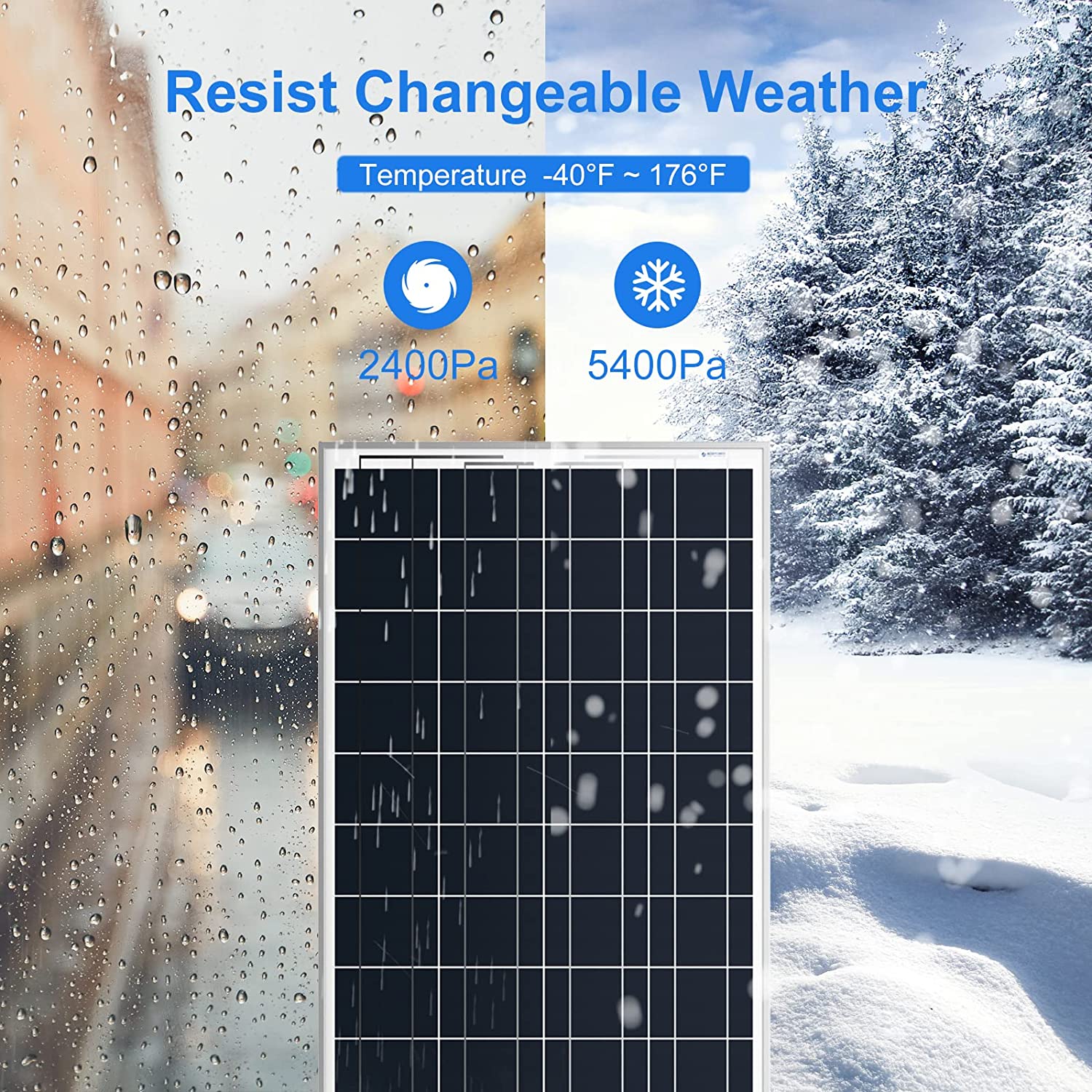
Solar panels face constant environmental challenges that gradually wear down their components and reduce efficiency. Temperature swings create the most persistent stress, panels heat up significantly during sunny days, sometimes exceeding 65°C (150°F), then cool dramatically overnight. This daily expansion and contraction cycle strains the bonds between solar cells, encapsulant layers, and other materials, potentially causing microcracks and delamination over years of exposure.
Weather amplifies these effects. Heavy rain tests seal integrity, while hail impacts can create immediate cracks or weaken cell structure for future failures. Wind loading flexes frames and mounting systems, stressing electrical connections. In humid climates, moisture gradually penetrates even high-quality seals, corroding metallic components and degrading encapsulant materials that protect the cells.
UV radiation breaks down polymer backsheets and encapsulants through a process called photodegradation, yellowing materials and reducing their protective capabilities. Coastal installations contend with salt spray that accelerates corrosion, while desert systems battle extreme heat combined with abrasive dust. Snow loads add mechanical stress in winter climates.
These environmental factors work together, compounding their effects and contributing to the typical 0.5-0.8% annual degradation rate throughout a panel’s operational life.
Types of Solar Panel Degradation
Module-Level Degradation
Module-level degradation targets the fundamental building blocks of your solar panel: the photovoltaic cells and the materials encapsulating them. Understanding these processes helps you recognize when performance issues stem from the panel itself rather than external factors.
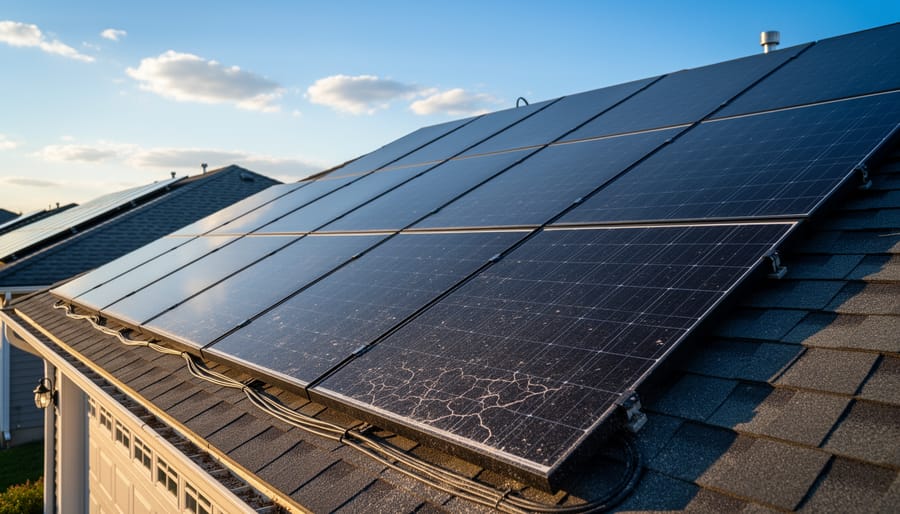
Cell cracking represents one of the most common forms of module-level degradation. Microcracks develop when solar cells experience mechanical stress from wind loads, hail impact, or thermal expansion and contraction. These hairline fractures disrupt the electrical pathways within the cell, creating isolated sections that can’t contribute to power generation. While a single microcrack might reduce output by just 1-2%, multiple cracks accumulate over time and can significantly impact efficiency.
Hotspot formation occurs when damaged or shaded cells become reverse-biased, converting incoming current into heat instead of electricity. These localized heat zones accelerate degradation in surrounding cells and can reach temperatures exceeding 100°C. Quality panels include bypass diodes to minimize hotspot risks, but older or budget systems remain vulnerable.
Encapsulant discoloration, often appearing as yellowing or browning of the protective ethylene-vinyl acetate layer, reduces light transmission to the cells beneath. This chemical degradation process intensifies in high-UV environments and can decrease power output by 3-5% or more in severely affected panels.
System-Level Degradation
While solar cells receive most attention when discussing degradation, the supporting components that hold your system together experience their own forms of wear. These elements, though often overlooked, can significantly impact your overall energy production.
Junction boxes, mounted on the back of each panel, contain electrical connections and bypass diodes. Over time, moisture infiltration can corrode these connections, increasing electrical resistance and reducing power output. In severe cases, corrosion may trigger complete circuit failures. Quality junction boxes with robust sealing resist this degradation better than budget alternatives.
Wiring connections throughout your system face similar challenges. The contact points between cables and terminals can oxidize, creating resistance hotspots. Temperature cycling causes expansion and contraction, gradually loosening connections and degrading contact quality. These issues compound across dozens of panels in residential systems, measurably reducing total generation.
Backsheet materials, which protect panel undersides from environmental exposure, can crack, delaminate, or yellow with UV exposure. When backsheets fail, moisture reaches internal components, accelerating cell-level and electrical degradation. Modern backsheets use advanced polymers engineered for 30-plus year lifespans, but older installations show higher failure rates in harsh climates.
Technology-Specific Degradation
Different solar panel technologies degrade at varying rates due to their distinct manufacturing processes and material compositions. Understanding these differences helps you choose panels that match your performance expectations and local conditions.
Monocrystalline panels typically exhibit the lowest degradation rates, averaging 0.3% to 0.5% annually. Their pure silicon structure resists material breakdown better than other technologies, making them the premium choice for long-term performance. Many manufacturers now offer 30-year warranties on monocrystalline products.
Polycrystalline panels degrade slightly faster at 0.5% to 0.7% per year. The grain boundaries in their multi-crystal structure create more pathways for moisture infiltration and material stress, though they remain reliable performers throughout their lifespan.
PERC (Passivated Emitter and Rear Cell) technology has revolutionized degradation resistance. These advanced monocrystalline panels often match or exceed standard monocrystalline rates while delivering higher initial efficiency. The passivation layer protects against LID and reduces thermal degradation.
Thin-film panels, including CdTe and amorphous silicon varieties, show higher degradation rates of 0.8% to 1.2% annually. However, they handle extreme temperatures and partial shading better than crystalline options, which can offset their faster decline in specific climates. Some thin-film technologies actually improve slightly after initial installation before entering normal degradation patterns.
Environmental Degradation Factors
Your solar panels face different degradation challenges depending on where you live. Location matters more than many installers acknowledge, and understanding your local environment helps you make smarter choices about panel selection and maintenance.
Coastal environments accelerate corrosion through salt-laden air that attacks metal frames, junction boxes, and electrical connections. Even panels rated for marine environments show faster degradation rates near oceans, with coastal installations typically experiencing 0.8-1.2% annual degradation compared to the 0.5-0.7% national average.
Desert and hot climates create a double threat. Extreme heat stresses all panel components, while fine dust and sand accumulate on surfaces, blocking light and creating localized hot spots. Panels in Phoenix or Palm Springs regularly reach 160°F or higher, well above the 77°F standard testing temperature, accelerating material fatigue.
Cold climates with heavy snow present mechanical stress from ice accumulation and thermal shock when temperatures swing from freezing to warm. Repeated freeze-thaw cycles can crack cells and delaminate protective layers. The good news? Snow-related degradation is typically slower than heat-driven decline.
High-humidity regions promote moisture infiltration, which corrodes internal connections and causes delamination. Combined with heat, humidity creates ideal conditions for accelerated aging. Florida installations, for instance, often show higher degradation than comparable systems in drier climates.
Real-World Impact: What Degradation Means for Your Solar Investment
Understanding degradation rates transforms from abstract percentages into real dollars and watts when you calculate what it means for your system. A typical quality solar panel with a 0.5% annual degradation rate will still produce approximately 88% of its original output after 25 years. For a 6 kW system that generates 8,000 kWh annually in year one, this translates to roughly 7,040 kWh in year 25, still substantial energy production supporting your home or business.
The financial picture remains compelling even with degradation factored in. If electricity costs $0.13 per kWh in your area and increases 3% annually (a conservative estimate), your system generates approximately $1,040 worth of electricity in year one. By year 25, despite reduced panel output, rising utility rates mean that 7,040 kWh saves you around $2,530 that year. Over the full 25-year period, cumulative savings typically range from $25,000 to $40,000 for residential installations, far exceeding initial investment costs of $15,000 to $20,000 after incentives.
When evaluating the practical impacts of degradation on your solar investment, consider these key factors:
- After 25 years, expect 85-90% of original output with quality monocrystalline panels
- ROI calculations should account for degradation but also factor in rising electricity costs that offset reduced production
- Most manufacturer warranties guarantee 80-85% output at 25 years, protecting your investment
- Degradation becomes a replacement concern only when output drops below 70-75% or physical damage occurs
Real-world monitoring data from systems installed in the early 2000s validates these projections. A 20-year-old residential system in California averaging 0.6% annual degradation still meets 88% of household electricity needs, with the homeowner reporting total savings exceeding $32,000. Similarly, commercial installations from 2010 continue delivering strong returns, with some operators reporting payback periods of 7-9 years despite accounting for gradual efficiency loss.
The math reveals why degradation shouldn’t derail solar investment decisions. Even assuming a higher 0.7% annual rate, your panels produce approximately 183,000 kWh over 25 years from that 6 kW system. Multiply that by average electricity costs and the economics remain overwhelmingly positive. Modern panels with degradation rates below 0.4% annually, increasingly common in 2026, deliver even better long-term value, maintaining over 90% output after 25 years.
Minimizing Solar Panel Degradation
While you can’t prevent degradation entirely, strategic choices during purchase and installation, plus consistent maintenance, can meaningfully slow the decline and protect your investment.
Start with Quality Panel Selection
Premium panels from established manufacturers typically degrade 20-30% slower than budget alternatives. Look for panels with degradation warranties under 0.4% per year; many top-tier monocrystalline and PERC modules in 2026 guarantee 92% output after 25 years, compared to 80-85% for older or economy models. Bifacial panels often show lower degradation because they distribute stress across front and rear surfaces, and half-cut cell designs reduce thermal load on individual cells. Ask installers for independently verified degradation data, not just manufacturer claims.
Prioritize Professional Installation
Poor mounting or wiring accelerates degradation faster than environmental exposure. Ensure panels are installed with adequate airflow underneath to minimize thermal cycling, mounting systems that create a four-inch gap between panels and roof allow heat dissipation that can reduce operating temperature by 10-15°C. Proper torque on electrical connections prevents micro-arcing that damages cells over time. Work with certified installers who follow manufacturer specifications exactly; shortcuts here compound into percentage points of lost efficiency over decades.
Implement a Maintenance Schedule
Clean panels twice yearly in most climates, more frequently in dusty or coastal areas. Accumulated dirt blocks sunlight and creates uneven heating that stresses cells. During cleaning, inspect for physical damage, check that drainage channels remain clear, and verify mounting hardware stays tight. Annual infrared scans can identify hotspots or failing cells before they cascade into larger problems. Trimming nearby vegetation prevents shade patterns that force some cells to work harder than others, creating localized degradation.
Monitor Performance Actively
Install monitoring that tracks production at the panel or string level, not just system-wide output. Gradual declines are normal, but sudden drops signal problems worth addressing immediately. Many systems in 2026 include AI-driven analytics that compare your degradation curve against expected rates and alert you to anomalies. Catching a failing optimizer or corroded connection early prevents the accelerated degradation that occurs when part of your array underperforms and forces other components to compensate.
Leverage Protective Technologies
Anti-reflective and self-cleaning glass coatings introduced in recent years reduce both soiling losses and UV exposure to encapsulant materials. Some manufacturers now apply edge sealants that block moisture infiltration at panel frames, addressing a primary degradation pathway. If you’re in an extreme climate, desert heat, coastal humidity, heavy snow, seek panels specifically rated and tested for those conditions; the upfront cost premium typically pays back through slower degradation and longer productive life.
Frequently Asked Questions About Solar Panel Degradation
How fast do solar panels degrade?
Most quality solar panels degrade at approximately 0.3% to 0.8% per year, with many premium manufacturers guaranteeing rates below 0.5% annually. This means after 25 years, your panels should still produce 80-90% of their original output.
Do premium panels degrade slower than budget options?
Yes, premium panels from established manufacturers typically use higher-grade materials and more robust construction that resists environmental stress better. The difference in degradation rates between budget and premium panels can mean an additional 3-8% efficiency retention over 25 years, making quality panels a worthwhile investment.
Can solar panel degradation be reversed or stopped?
No, degradation involves permanent physical and chemical changes to the solar cells and materials. However, you can slow the rate through proper maintenance, cleaning, and protecting panels from excessive thermal stress and physical damage.
When should I replace degraded solar panels?
Replace panels when they fall below 70-75% of original output, when physical damage compromises safety, or when repair costs exceed replacement value. Most panels don’t need replacement within their 25-30 year lifespan if properly maintained.
How can I measure degradation in my system?
Monitor your system’s energy production data through your inverter or monitoring software, comparing current output to expected performance based on weather and seasonal factors. An unexpected drop of more than 10% warrants a professional inspection to distinguish degradation from other issues like shading or equipment problems.
Does regular cleaning reduce degradation rates?
Cleaning prevents temporary efficiency losses from dirt buildup but doesn’t directly slow the underlying degradation process. That said, keeping panels clean prevents hotspots from shaded or soiled areas, which can accelerate localized degradation.
Understanding these common concerns helps you set realistic expectations for your solar investment. The warranties offered by reputable manufacturers reflect confidence in their degradation rates, most guarantee 80-85% output after 25 years, providing peace of mind about long-term performance. If you’re shopping for panels in 2026, look for products with performance warranties that specify maximum annual degradation rates rather than just end-of-term guarantees.
Regular monitoring gives you the information you need to spot problems early. Your system’s performance data becomes a valuable baseline for tracking changes over time, helping you distinguish between normal aging and issues requiring attention. Many modern monitoring systems now flag unusual performance drops automatically, making it easier than ever to keep tabs on your solar investment without constant manual checking.
Solar panel degradation is a natural, predictable process that affects all photovoltaic systems over time. However, understanding the science behind it reveals why this gradual performance decline shouldn’t discourage your investment in solar energy. Modern panels manufactured in 2026 typically degrade at rates well below 0.5% annually, meaning they’ll still produce over 85-90% of their original output after 25 years of continuous operation.
The degradation mechanisms we’ve explored, from light-induced changes in the first days to environmental stresses over decades, are well-documented and accounted for in manufacturer warranties and financial projections. Quality panels paired with professional installation consistently outperform expectations, delivering reliable clean energy and strong returns throughout their lifespan.
Your solar roof represents more than just panels on your property. It’s a commitment to sustainable energy that pays dividends financially and environmentally for decades. The technology has matured to the point where degradation rates continue improving with each generation of panels, while monitoring tools let you track performance in real time.
The small efficiency losses that occur naturally over 25-30 years pale in comparison to the substantial energy independence, cost savings, and environmental benefits you’ll realize. With proper maintenance and realistic expectations about gradual performance changes, your solar investment will deliver clean power reliably for generations, making it one of the most dependable upgrades you can make to your property.