Solar Energy Storage Systems That Actually Pay for Themselves
Solar energy storage systems capture the excess electricity your panels generate during sunny hours and store it in batteries for use when the sun goes down or during power outages. At the heart of these systems is lithium-ion battery technology, the same proven chemistry that powers electric vehicles, configured to cycle your home’s energy day after day for typically 10 to 15 years. For homeowners who’ve already invested in solar panels or are planning a new installation, storage transforms solar from a daytime-only resource into true energy independence.
The value proposition has shifted dramatically. Battery prices have dropped more than 70% since 2015, and in 2026, a typical residential storage system ranges from $8,000 to $15,000 after federal incentives, depending on capacity and brand. That investment pays back faster in areas with time-of-use electricity rates, frequent outages, or limited net metering policies that reduce compensation for the solar energy you send back to the grid.
Three main storage technologies dominate the residential market: lithium-ion remains the most popular for its high energy density and proven track record, while newer lithium iron phosphate (LFP) chemistry offers enhanced safety and longevity at slightly higher upfront cost. Flow batteries and solid-state options are emerging but remain niche choices for most homeowners.
The decision isn’t just financial. Storage systems provide backup power during blackouts, reduce your reliance on fossil fuel-heavy grid electricity during evening peak hours, and maximize the environmental benefit of your solar investment by ensuring clean energy powers your home around the clock.
Why Solar Panels Need a Storage Partner
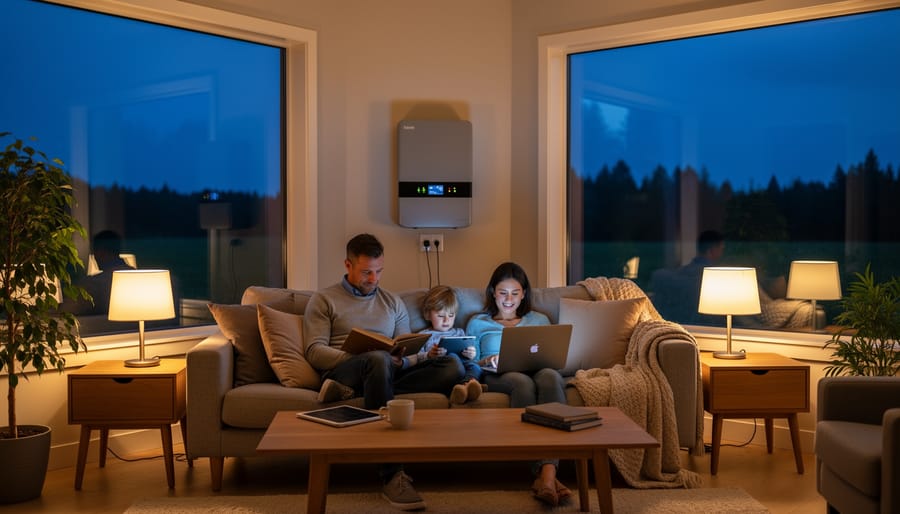
Solar panels are incredibly effective at what they do, converting sunlight into clean electricity, but they work on nature’s schedule, not yours. Most residential solar systems produce their peak output between 10 a.m. and 3 p.m., when the sun is strongest. The problem? That’s typically when you’re at work, the kids are at school, and your home sits mostly empty, quietly generating power you’re not using.
Your actual energy demand follows a completely different pattern. Usage spikes in the early morning as families get ready for the day, then surges again in the evening when everyone returns home, turns on lights, cooks dinner, runs the dishwasher, and cranks up the heating or air conditioning. By the time you need electricity most, the sun has set and your panels have stopped producing entirely.
Without storage, any excess solar energy you generate during those productive midday hours gets sent back to the electrical grid. Many utilities offer net metering programs that credit you for this excess power, but the economics have shifted considerably. These credits often don’t match what you pay for electricity drawn from the grid during evening hours, especially as more utilities move toward time-of-use rates that charge premium prices during peak demand periods.
This creates what solar professionals call the “duck curve problem”, you’re giving away electricity at wholesale rates during the day and buying it back at retail rates at night. You’re technically reducing your carbon footprint, but you remain entirely dependent on the grid for power when you actually need it. Storage changes this equation completely, letting you bank your daytime solar production and use it whenever you want, transforming your solar investment from a partial solution into genuine energy independence.
How Solar Energy Storage Actually Works
Think of a solar energy storage system as a smart piggy bank for electricity. During the day, your solar panels generate power, often more than you can use in the moment. Instead of letting that excess energy go to waste or sending it back to the grid for minimal credit, a storage system captures it for later use.
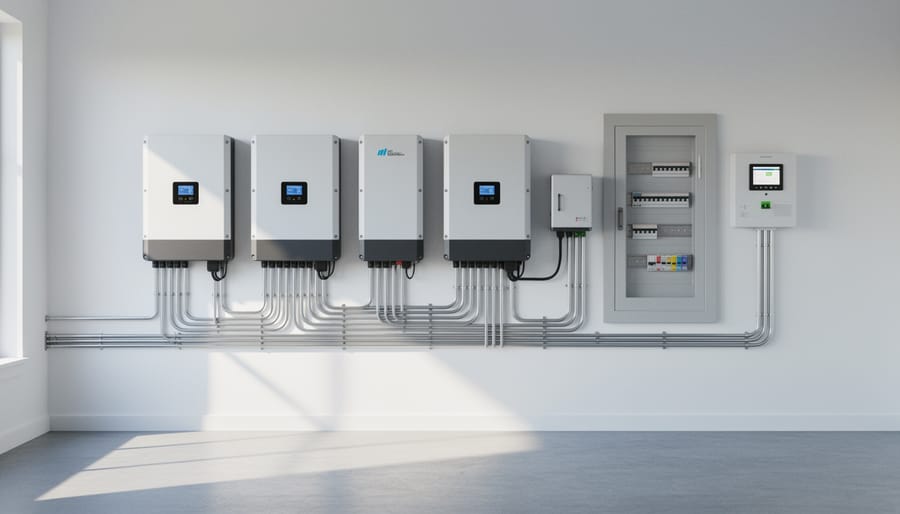
The process starts with your solar panels converting sunlight into direct current (DC) electricity. This raw power flows through an inverter, which transforms it into the alternating current (AC) that your home appliances actually use. Here’s where storage changes the game: any surplus electricity gets routed to your battery system instead of disappearing into the grid.
Modern battery systems use sophisticated charge controllers that prevent overcharging and optimize how energy flows into storage. These controllers work constantly to balance the incoming solar power, your home’s immediate energy needs, and the battery’s capacity. When your panels produce more than you need, the excess charges your batteries. When clouds roll in or night falls, your batteries seamlessly supply power to your home.
The discharge process mirrors charging in reverse. Your battery’s inverter converts stored DC power back into AC electricity that flows through your home’s electrical panel, powering everything from lights to refrigerators. Most systems handle this transition so smoothly that you’d never notice whether power comes from your panels, batteries, or the grid.
What makes current storage systems remarkably clever is their automated energy management. Built-in software monitors your usage patterns, weather forecasts, and electricity rates. If your utility charges more during peak evening hours, the system prioritizes battery power during those expensive windows. Before a forecasted storm, it might fully charge your batteries as a precaution.
The charging cycle itself deserves mention. Unlike phone batteries that you drain and recharge daily, solar storage systems typically cycle through partial charges. Your battery might discharge to sixty percent overnight, then recharge during the next sunny day. This partial cycling actually extends battery lifespan compared to full discharge cycles, meaning your system maintains efficiency for years while quietly managing your home’s energy flow in the background.
Types of Solar Storage Systems for 2026
Lithium-Ion Battery Systems
Lithium-ion batteries power most home solar storage systems today, and for good reason. They pack substantial energy capacity into relatively compact units, making them practical for garage or basement installation without taking over your home. A typical residential lithium-ion system stores between 10 and 20 kilowatt-hours, enough to power essential appliances through the evening and night for most households.
These batteries excel at efficiency, converting about 90-95% of stored solar energy back into usable electricity. That high round-trip efficiency means less energy waste and more value from every kilowatt your solar roof generates. They also handle thousands of charging cycles before capacity drops noticeably, modern systems often maintain 80% capacity after 10 years of daily use.
The market dominance comes down to proven performance and steadily dropping prices. Manufacturing scale has driven costs down significantly over the past five years, making lithium-ion systems accessible to average homeowners rather than just early adopters with deep pockets.
Safety concerns that plagued early versions have largely been addressed. Current systems include thermal management, automatic shutoff mechanisms, and fire-resistant enclosures. Sophisticated battery management systems monitor individual cells constantly, preventing overcharging and overheating before problems develop. While no energy storage is entirely risk-free, today’s lithium-ion batteries undergo rigorous testing and certification, making them safer than many assume.
Lithium Iron Phosphate (LiFePO4) Solutions
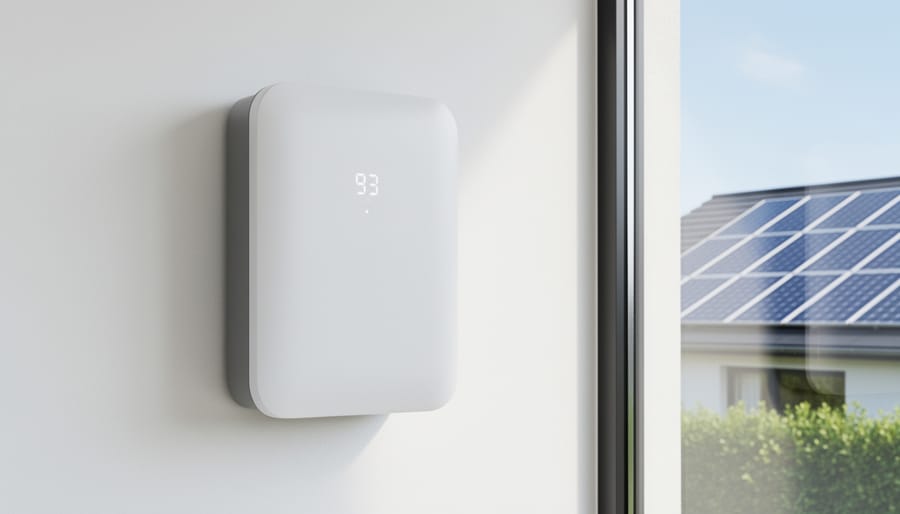
LiFePO4 batteries are steadily gaining ground as a premium storage option, particularly among homeowners planning to stay in their properties long-term. These systems typically last 4,000 to 10,000 charge cycles compared to standard lithium-ion’s 3,000 to 5,000 cycles, translating to roughly 15 to 20 years of reliable service versus 10 to 15 years.
The enhanced safety profile stems from superior thermal stability. LiFePO4 cells resist thermal runaway far better than conventional lithium-ion, making them less prone to overheating issues. They also handle deeper discharge cycles without degrading performance, meaning you can regularly use 90% or more of the stated capacity without shortening battery life.
The trade-off comes in upfront cost and energy density. Expect to pay 20% to 30% more than comparable lithium-ion systems, and LiFePO4 units are typically bulkier for the same storage capacity. This matters if installation space is tight.
Who benefits most? Property owners prioritizing longevity over initial savings, those in hot climates where thermal management matters, and anyone seeking maximum peace of mind around safety. If you’re installing storage as part of a long-term sustainable energy strategy rather than seeking the quickest payback, LiFePO4’s durability and stability make compelling sense despite the higher entry price.
Saltwater and Flow Batteries
For homeowners prioritizing environmental impact above all else, saltwater and flow batteries offer compelling alternatives to lithium-based systems. These technologies eliminate toxic heavy metals entirely, using abundant materials like saltwater electrolytes or vanadium solutions that pose minimal environmental risk throughout their lifecycle.
Saltwater batteries stand out for complete recyclability and zero fire risk, making them genuinely non-toxic from manufacturing through disposal. Flow batteries, meanwhile, can last 20+ years with minimal performance degradation because their liquid electrolytes don’t suffer the same wear as solid battery materials. You can even replace the electrolyte to effectively refresh the system.
The trade-off? Both technologies currently cost more upfront than lithium-ion systems and require significantly more physical space for equivalent storage capacity. Availability remains limited too, with fewer manufacturers and installers offering these options compared to mainstream battery systems. They also operate at lower efficiency rates, meaning you’ll lose more energy in the storage and retrieval process.
These systems make most sense for buyers with ample installation space who value sustainability and longevity over compact design and immediate cost savings.
Hybrid Storage Options
Hybrid storage systems offer the best of both worlds by maintaining your grid connection while adding battery backup. Unlike completely off-grid setups, these systems let you pull from the grid when needed and export excess solar energy, while still providing power during outages.
The smart controller automatically decides whether to charge your batteries, use stored energy, or draw from the grid based on real-time electricity rates and your usage patterns. During peak rate hours, you use stored solar power. When rates drop, the system can even charge your batteries from cheap grid electricity for use later.
This flexibility dramatically shortens payback periods compared to off-grid systems. You’re not forced to oversize your battery capacity for those rare cloudy weeks, because the grid serves as backup to your backup. Most modern solar installations with storage use this hybrid approach, it delivers energy security without the premium cost of complete grid independence, while still maximizing your solar investment’s financial returns.
Sizing Your Storage System Correctly
Getting your storage capacity right matters more than brand names or fancy features. Too small, and you’ll still rely heavily on the grid during evenings. Too large, and you’ve spent thousands on battery capacity that sits unused.
Start with your actual energy consumption, not estimates. Check your electricity bills from the past year and find your average daily kilowatt-hour (kWh) usage. Most homes use between 20-30 kWh per day, but your number might be quite different. Winter months often show higher consumption due to heating and reduced daylight hours, so look at your peak months rather than just the annual average.
Next, consider what you’re trying to achieve. Do you want complete energy independence during power outages, or simply to maximize self-consumption of your solar production? For basic evening and morning coverage when solar panels aren’t generating, you’ll need roughly 50-70% of your daily consumption in storage capacity. A home using 25 kWh daily might function well with a 15 kWh battery system. This covers evening cooking, lighting, and entertainment without tapping the grid.
If backup power during outages is your priority, think about which appliances you absolutely need and for how long. Running your entire home for multiple days requires substantial (and expensive) capacity. A more practical approach targets essential circuits, refrigeration, some lighting, communication devices, and perhaps one heating or cooling zone. Calculate the wattage of these essentials and multiply by your desired backup duration in hours.
Your solar panel output directly affects sizing decisions too. A 10 kW solar array producing 40-50 kWh on sunny days generates far more than you’ll use immediately. Larger storage capacity lets you bank that excess for cloudy periods or nighttime use. Smaller arrays producing just enough to offset daytime consumption may not justify large battery systems.
Seasonal variations complicate the picture further. Solar production drops significantly in winter months in many regions, while energy consumption often increases. Systems sized for summer abundance may underperform when you need them most. Conservative sizing accounts for your least productive solar months, ensuring year-round reliability rather than just summer success.
Most installers recommend starting with enough capacity to cover your typical overnight usage, then expanding later if needed. Battery systems are modular, you can add capacity as your needs grow or your budget allows.
The Real Costs and Savings in 2026
Storage systems represent a significant upfront investment, but understanding the complete financial picture reveals why thousands of homeowners are adding batteries to their solar installations. A typical residential storage system in 2026 ranges from $8,000 to $15,000 installed, depending on capacity and technology choice. This covers the battery unit, inverter (if needed), installation labour, and electrical upgrades required to integrate the system safely with your home’s power supply.
Installation costs vary based on your existing setup. If you’re adding storage to an established solar array, expect to pay towards the higher end because retrofitting requires additional equipment and labour. Homeowners installing storage alongside a new solar roof system often see better pricing since electricians complete both installations simultaneously and share equipment costs.
The 30% federal Investment Tax Credit currently applies to solar storage when installed with solar panels, reducing that $12,000 average system to an effective $8,400 after the credit. Some states offer additional rebates or performance incentives that further lower the net cost. California, for instance, provides self-generation incentives, while New York offers storage-specific tax credits. Your actual incentives depend on where you live and current programme availability.
Monthly electricity bill savings depend entirely on your utility’s rate structure and your usage patterns. Homeowners with time-of-use rates see the strongest returns, typically saving $80, $150 monthly by storing cheap midday solar energy and using it during expensive evening peak hours. Those in areas with flat-rate electricity or generous net metering programmes see smaller monthly savings but gain substantial value from backup power during outages.
Beyond the obvious financial metrics, storage systems protect against rising electricity costs, which historically increase 2-3% annually. A battery purchased today locks in energy independence at current solar generation costs rather than future grid prices. Unlike many hidden solar costs that surprise homeowners, storage expenses are straightforward and predictable.
Most quality battery systems carry 10-year warranties covering at least 70% capacity retention. With proper sizing, your system continues delivering value well beyond its payback period, often running efficiently for 15 years or more before requiring replacement.
Integrating Storage with Your Solar Roof
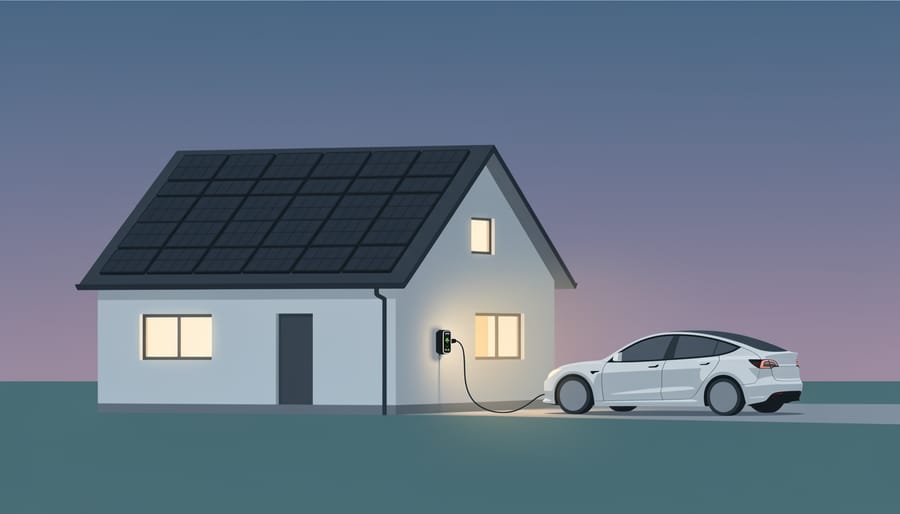
When you choose a solar roofing system, planning for storage from the start gives you significant advantages over adding batteries later. Integrated installations streamline both the equipment setup and the electrical connections, often reducing overall costs by 15-20% compared to retrofitting.
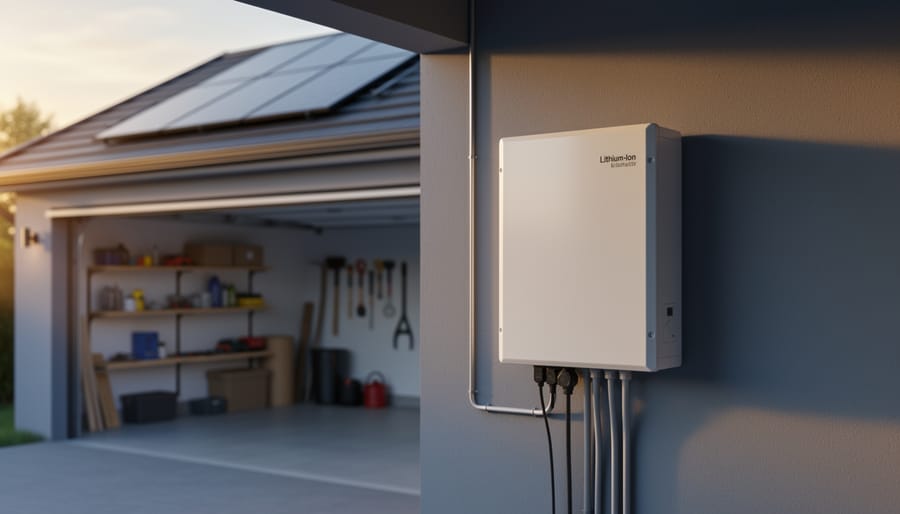
The physical placement of your battery system depends mainly on your roof type and home layout. Most lithium-based storage units mount on exterior walls near your electrical panel or in garages, keeping them accessible while protecting them from extreme temperatures. For homes with solar shingles or tiles, installers typically position batteries to minimize visible wiring runs across exterior walls. Traditional panel systems offer more flexibility since the conduit pathways are already established.
Modern solar roofs with built-in panels create especially clean integration opportunities. The battery inverter can connect directly to the same junction point where your solar roof feeds into the house, eliminating redundant equipment and simplifying the system architecture. This unified approach means fewer potential failure points and easier troubleshooting down the road.
Temperature management matters more than many homeowners realize. Batteries perform best between 50-80°F, so shaded exterior walls or climate-controlled garages work better than sun-baked surfaces directly beneath dark solar roofing. Some installers create small ventilated enclosures that protect units from direct sunlight while maintaining airflow.
Aesthetic considerations extend beyond just hiding boxes on walls. Coordinating your storage installation with your solar roof’s visual design creates a cohesive look. Sleek wall-mounted units in neutral colors blend naturally with modern solar shingle installations, while ground-mounted options work well for properties with standalone solar roof sections.
The electrical work proves considerably simpler when designed together. Your installer configures the entire energy flow, from roof to battery to home, as one system, optimizing charge controllers, inverters, and safety disconnects in a single installation. Retrofitting requires additional equipment, separate permitting, and potentially upgrading electrical panels that weren’t sized for battery loads initially.
Maintenance and Longevity Expectations
Modern solar storage systems require remarkably little hands-on maintenance, especially compared to traditional backup generators or older battery technologies. Most homeowners find they can set up their system and largely forget about it, aside from occasional monitoring through their app.
The most significant task is keeping the battery unit’s ventilation clear and ensuring the installation area stays within recommended temperature ranges. Most systems perform best between 50-80°F, and extreme heat or cold can accelerate capacity loss. Beyond that, you’re looking at visual inspections maybe twice a year to check for obvious issues like loose connections or unusual corrosion.
Battery performance does decline gradually, similar to solar panel degradation. Quality lithium-ion systems typically retain 70-80% of their original capacity after 10 years of daily cycling. This mirrors the predictable panel performance over time that experienced solar users already understand. The degradation curve is steepest in the first few years, then levels off considerably.
Warranty coverage has improved dramatically. Most reputable manufacturers now offer 10-year warranties with guaranteed capacity retention, often 70% after a decade. Some premium systems push this to 15 years. These warranties typically cover defects and performance thresholds but not damage from improper installation or environmental extremes.
Eventually, yes, you’ll need replacement. A well-maintained system installed today should deliver useful service for 12-15 years, with some lasting beyond 20 years at reduced capacity. When replacement time comes, you’ll likely benefit from better technology at lower prices. The inverter may need replacement earlier, around the 10-year mark, but this is significantly cheaper than a full battery swap.
Smart Features Making Storage Systems More Valuable
Today’s solar storage systems are less like simple batteries and more like intelligent energy managers that work behind the scenes to maximize your savings and convenience. The technology inside these systems has advanced dramatically, transforming storage from a passive backup solution into an active money-saving tool.
Most modern systems connect to your home WiFi and come with mobile apps that give you real-time visibility into your energy production, storage levels, and consumption patterns. You can see exactly how much solar energy you generated today, how much you stored, and what you’re currently drawing from the battery versus the grid. This transparency alone helps many homeowners identify energy waste and adjust their habits.
The real value comes from automated energy management features. Time-of-use optimization is particularly powerful if your utility charges different rates throughout the day. Your storage system learns these rate schedules and automatically stores energy during cheaper periods while discharging during expensive peak hours, even if you’re generating minimal solar power that day. This strategy, called load shifting, can reduce electricity bills by 30-40% in areas with significant rate variations.
Weather prediction integration takes this further. Your system connects to local weather forecasts and adjusts charging patterns accordingly. If heavy clouds are predicted tomorrow, it prioritizes fully charging tonight. If sunny days are ahead, it might discharge more freely today, knowing it will easily recharge.
Advanced systems also monitor grid conditions and can switch seamlessly to battery power during outages before you notice the lights flickering. Some models learn your household patterns, pre-cooling your home before peak rate periods or ensuring the battery is charged before your typical evening usage spike.
These smart features essentially put your energy management on autopilot, constantly optimizing for maximum savings without requiring any daily input from you.
Making the Decision: Is Storage Right for You?
Storage isn’t the right choice for every solar installation, and an honest assessment of your situation will save you money and frustration. The decision comes down to four key factors that vary significantly by location and lifestyle.
Start with your electricity rate structure. If your utility offers generous net metering that credits solar generation at retail rates, storage becomes less financially compelling, you’re essentially using the grid as a free battery. However, if your area has time-of-use rates with expensive evening peaks, or if net metering compensation is minimal, storage can deliver substantial savings by shifting your solar power to high-cost hours. Contact your utility to understand exactly how they handle solar credits and whether rates vary by time of day.
Grid reliability plays an equally important role. Homes in areas with frequent outages or extended storm-season blackouts benefit enormously from backup power, while those with rock-solid utility service might find storage hard to justify on resiliency alone. Consider your vulnerability: Do you work from home? Do you have medical equipment that requires power? Is your business critically dependent on uptime?
Your energy independence goals matter beyond pure economics. Some homeowners prioritize self-sufficiency and reducing grid dependence as lifestyle values, while others focus strictly on return on investment. There’s no wrong answer, just clarity about what you’re optimizing for. Weigh these personal priorities against the solar energy cons including upfront costs to get a complete picture.
Does storage make sense if I have reliable grid service?
It depends on your rate structure and backup needs. With dependable electricity but time-of-use rates, storage can still deliver savings by shifting solar energy to expensive peak hours.
Should I install storage with my solar panels or add it later?
Installing together typically reduces overall costs since electrical work, permitting, and labor are combined. However, adding storage later remains feasible if you want to start with panels alone.
Is storage worth it just for environmental benefits?
If maximizing your carbon footprint reduction matters more than financial payback, storage ensures you use clean energy around the clock rather than drawing from fossil-fuel grids at night.
Environmental commitment represents the final consideration. Storage maximizes the climate benefit of your solar investment by ensuring you consume clean energy day and night instead of defaulting to grid power after sunset. For sustainability-focused buyers, this 24-hour clean energy cycle justifies the investment even when financial payback extends longer.
The best approach? Calculate your specific numbers, current electricity costs, available incentives, backup value, and rate structure, then decide whether storage aligns with both your budget and your broader energy goals.
Solar panels alone represent half a solution. Without storage, you’re essentially tethering your sustainable energy goals to the utility company’s schedule and rates. Storage systems transform that partial independence into genuine energy autonomy, letting you use the clean energy you generate whenever you need it most.
The financial case has never been stronger. Modern storage systems pay for themselves through utility bill elimination, protection against rising electricity costs, and increasing home values. When you factor in available incentives and the extended lifespan of today’s battery technology, the return on investment becomes increasingly compelling for most homeowners and businesses.
Beyond dollars and cents, storage delivers something harder to quantify but equally valuable: resilience. Whether facing grid outages, peak demand charges, or simply wanting control over your energy future, a well-designed storage system provides security that grid-dependent solar can’t match.
The environmental impact extends your solar investment’s reach too. Every kilowatt-hour you store and use later is one less drawn from fossil fuel plants during peak demand periods. You’re maximizing the clean energy you generate rather than sending it back to a grid that may not need it at midday.
Storage isn’t right for every situation, we encourage you to read these cons and evaluate your specific circumstances. But for those ready to embrace complete energy independence, pairing solar roofing with storage represents the most comprehensive path to sustainable living. Solar Roofs designs integrated solutions that optimize both generation and storage from day one, ensuring your system delivers maximum value for decades to come.