How to Choose Solar Panels to Generate Electricity: A Buying Guide
Solar panels convert sunlight into electricity through photovoltaic cells that capture photons and release electrons, creating a direct current that’s then converted to usable alternating current for your home or business. The technology has matured dramatically, and with approximately 5 million U.S. households already generating their own clean power and that number expected to double by 2030, choosing the right panels has never been more critical or more confusing.
This guide cuts through the marketing noise to help you make an informed decision. You’ll learn how modern panels actually work, what separates top-tier efficiency ratings of 22.8% to 24.9% from budget options, and why warranties now stretching to 40 years on premium models matter for your long-term investment. We’ll compare the three main panel types, monocrystalline, polycrystalline, and thin-film, showing you exactly when each makes sense for your situation.
With installed costs sitting between $2.50 and $3.50 per watt before the 30% federal tax credit, your choice carries significant financial weight. A poorly selected system might save you money upfront but cost thousands in lost production over two decades. We’ll walk you through the key factors that determine real-world performance, from efficiency and degradation rates to temperature coefficients and shade tolerance, then provide specific recommendations based on whether you prioritize maximum output, budget constraints, or aesthetic appeal. You’ll also discover the most common purchasing mistakes and how to avoid them, ensuring your solar investment delivers the energy independence and environmental benefits you’re seeking.
Understanding Solar Panel Technology
Solar panels work by capturing photons from sunlight and converting them into electrical energy through photovoltaic cells. These cells are made of semiconductor materials, typically silicon, that create an electric field when sunlight strikes them. When photons hit the cell’s surface, they knock electrons loose from the silicon atoms, causing those electrons to flow in a directed path, this movement of electrons is electricity.
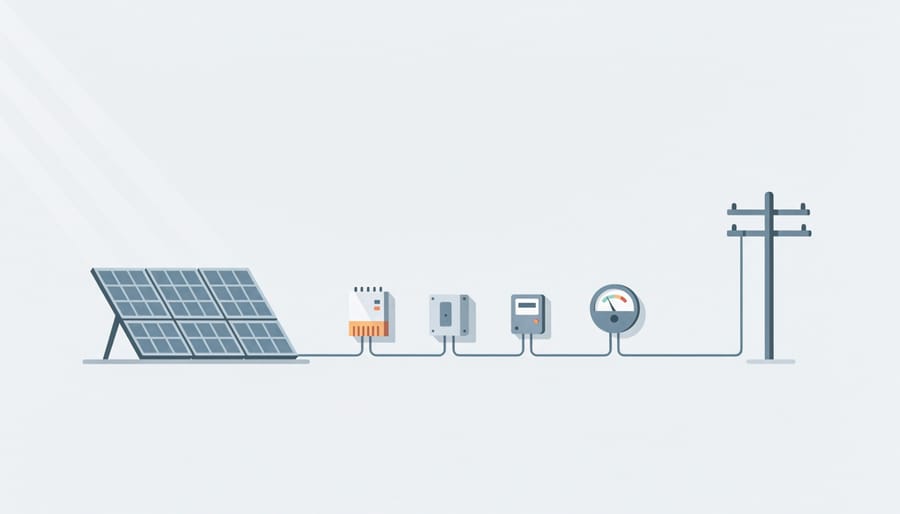
The electricity generated by the panels starts as direct current, which flows in one direction. Since homes and businesses run on alternating current, an inverter converts the DC power into AC power that can run your appliances, lights, and electronics. Any excess electricity can be stored in batteries or fed back to the grid, depending on your system setup.
Understanding this process matters because it directly affects your panel selection. More efficient panels capture and convert a higher percentage of the sunlight that hits them, meaning you’ll need fewer panels to generate the same amount of electricity. The semiconductor quality, cell design, and manufacturing precision all influence how effectively panels turn sunlight into energy for your home.
When you’re evaluating different panels, you’re essentially comparing how well each technology performs this conversion process under real-world conditions. Factors like temperature tolerance, low-light performance, and degradation rates all stem from how the photovoltaic cells are constructed and how efficiently they maintain electron flow over time. This foundational knowledge helps you ask the right questions and weigh the specifications that truly impact your system’s long-term performance.
Key Factors When Choosing Solar Panels
Efficiency Ratings Explained
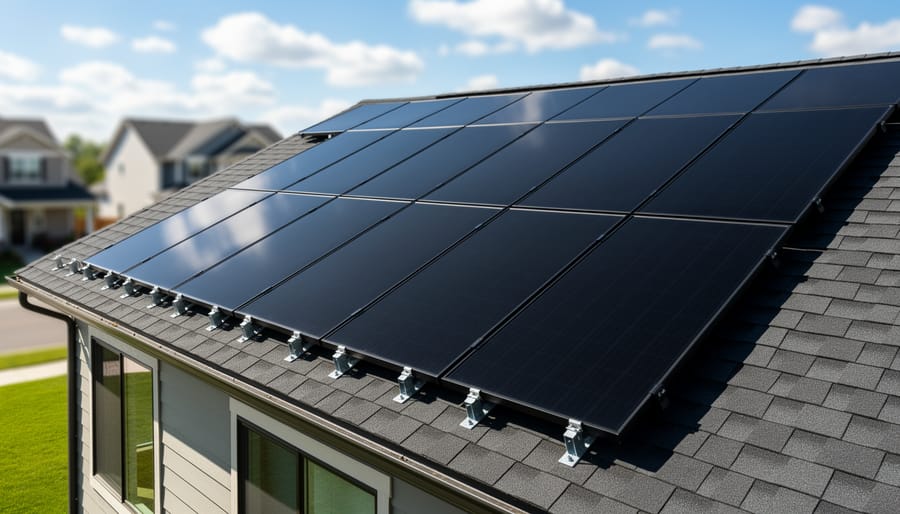
Efficiency ratings tell you how much sunlight a panel converts into usable electricity. A 23% efficiency rating means the panel transforms 23% of incoming solar energy into power, while the rest becomes heat or reflects away. In 2026, top-tier residential panels achieve 22.8% to 24.9% efficiency, a meaningful jump from just a few years ago when 20% marked premium territory.
Higher efficiency matters most when roof space is limited. A 24% efficient panel generates more electricity per square foot than a 20% model, so you’ll need fewer panels to meet your energy needs. For a typical home requiring 8,000 kWh annually, choosing high-efficiency panels might mean installing 16 panels instead of 20, freeing up roof area and reducing installation complexity.
Efficiency also influences long-term performance. Higher-efficiency panels typically maintain better output over time, with slower solar panel degradation curves. Premium models often lose just 0.25% to 0.35% efficiency yearly, while budget options may degrade faster. These degradation rates compound over decades, affecting total electricity production and return on investment.
That said, efficiency isn’t everything. A moderately efficient panel with a strong warranty and competitive pricing can outperform a cutting-edge model if the cost difference doesn’t justify the marginal output gain. Balance efficiency against your specific roof constraints, budget, and energy goals rather than chasing the highest number alone.
Warranty Coverage and Longevity
When you invest thousands of dollars in a solar system, the warranty acts as your safety net against manufacturing defects and performance decline. Understanding what’s actually covered makes the difference between a protected investment and an expensive gamble.
Solar panel warranties come in two distinct parts. The product warranty covers physical defects, cracked cells, junction box failures, frame corrosion, that could stop your panels from working. The performance warranty guarantees your panels will still produce a minimum percentage of their original output after decades of use. Don’t confuse the two; a 25-year product warranty doesn’t automatically mean 25 years of guaranteed power output.
The warranty landscape shifted dramatically in recent years. Premium manufacturers now back their top-tier panels with 40-year warranties, a significant leap that reflects improved manufacturing quality and competitive pressure in the solar market. These extended terms typically cover both product defects and performance degradation, promising that panels will retain at least 90% efficiency at year ten and around 85% by year forty.
Most mainstream brands still cap warranties at 25 years, which remains industry standard and perfectly adequate for most homeowners. These panels will likely produce electricity well beyond the warranty period; the guarantee simply defines the manufacturer’s liability window. A shorter warranty doesn’t necessarily mean inferior panels, but it does shift more long-term risk onto you.
Read the fine print carefully. Some warranties require professional installation by certified contractors, specific maintenance schedules, or exclude coverage for extreme weather damage. Transferability matters too if you plan to sell your home, a warranty that transfers to the next owner adds tangible property value.
Cost Per Watt and Total Investment
Understanding the price of solar panels means looking beyond the sticker price to the total installed cost per watt. In 2026, most residential systems fall between $2.50 and $3.50 per watt before incentives. That range reflects quality tiers, panel efficiency, installation complexity, and regional labor costs.
To calculate your total investment, multiply the cost per watt by your system size. A typical home needs six to eight kilowatts of capacity, which translates to a gross system price of $15,000 to $28,000 at the upper end. If you live in an area with high electricity rates or need more panels due to limited roof space, your costs will track toward the higher figure. Conversely, a smaller system with average efficiency panels in a competitive installer market might land closer to the lower threshold.
When comparing quotes, break down what each installer includes in their per-watt price. Some bundle monitoring equipment, permitting fees, and extended warranties, while others charge separately for those items. Ask whether the quote covers panel mounting hardware, inverter upgrades, and electrical work to bring your system up to code. A slightly higher cost per watt that includes comprehensive installation and a strong warranty often delivers better value than the rock-bottom bid that leaves you paying for add-ons later.
Your energy needs dictate system size more than anything else. Pull your past 12 months of electricity bills to see your average monthly kilowatt-hour usage, then work with your installer to size a system that offsets 80% to 100% of that consumption. Most households find that a well-sized system pays for itself in seven to 12 years through reduced utility bills.
Types of Solar Panels Compared
Monocrystalline Panels
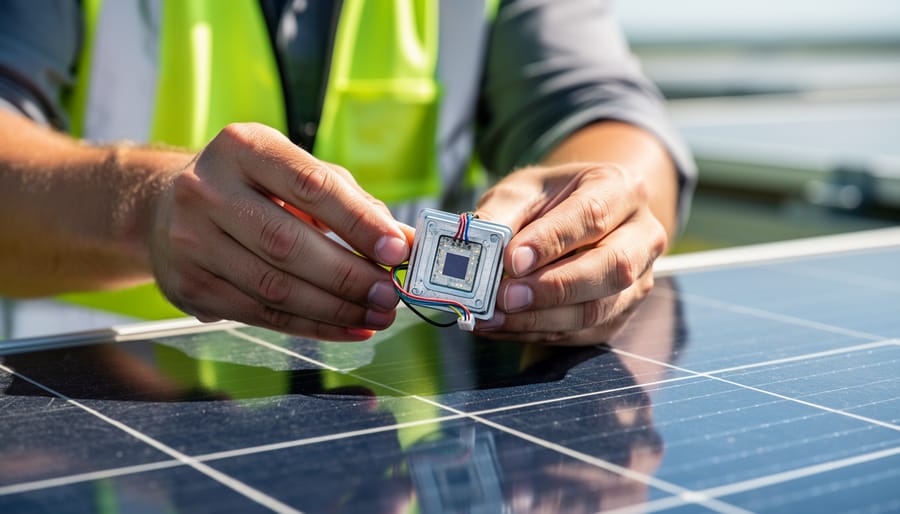
Monocrystalline panels represent the gold standard for residential solar installations in 2026, offering the highest efficiency ratings you’ll find in today’s market. These panels feature uniform black cells cut from single silicon crystals, giving them both superior performance and a sleek appearance that complements modern roofing aesthetics.
With top-tier residential panels now reaching 22.8% to 24.9% efficiency, monocrystalline technology converts more sunlight per square foot than any alternative. You’ll typically find these panels rated between 400W and 500W per module, meaning you can generate more electricity with fewer panels on your roof. This space efficiency matters tremendously if you have limited roof area or significant shading issues, you’ll maximize your energy production within your available space.
The aesthetic advantage shouldn’t be overlooked either. The uniform black surface creates a clean, contemporary look that many homeowners prefer over the blue-speckled appearance of other panel types. This visual appeal makes monocrystalline panels particularly popular for street-facing installations where appearance impacts curb appeal.
While monocrystalline panels command premium pricing, their combination of high output, space efficiency, and longevity often justifies the investment. They perform better in low-light conditions and maintain efficiency across a wider temperature range, making them the practical choice for most residential applications where roof space comes at a premium.
Polycrystalline Panels
Polycrystalline panels offer a cost-effective entry point for homeowners working with tighter budgets. These blue-tinted modules typically deliver 15-17% efficiency, lower than monocrystalline alternatives, which means you’ll need more roof space to generate the same amount of electricity. The manufacturing process creates a speckled appearance that some find less visually appealing, though this rarely matters once panels are installed on a roof.
These panels make the most sense when you have ample roof area and want to minimize upfront costs. They perform reliably in moderate climates but lose slightly more efficiency in high heat compared to monocrystalline options. Most polycrystalline panels come with 25-year warranties and will generate dependable power for decades, making them a practical choice for straightforward residential installations where space isn’t constrained. The lower price per watt can offset the efficiency gap, particularly for systems sized above 6 kW where the cost difference becomes substantial.
Thin-Film and Specialty Options
Thin-film panels offer a distinct alternative to crystalline silicon technology. Rather than rigid wafers, these panels use layers of photovoltaic material deposited on flexible substrates like glass, plastic, or metal. The result? Panels that weigh significantly less, often half the weight of traditional modules, and can conform to curved or irregular surfaces.
This flexibility opens doors for installations where standard rigid panels won’t work: curved commercial roofing, RV tops, boat canopies, or metal roofs with standing seams. Thin-film also performs better in partial shade and high temperatures, maintaining more consistent output when conditions aren’t ideal.
The trade-off is efficiency. Most thin-film panels deliver 10% to 13% efficiency, roughly half that of monocrystalline options. You’ll need substantially more roof space to generate the same power, which limits their residential appeal. They make the most sense for commercial buildings with expansive, flat roofs where weight restrictions matter more than space constraints, or for off-grid applications where flexibility and durability trump peak efficiency. For standard residential rooftops, monocrystalline panels remain the more practical choice.
Best Solar Panels for Different Needs
Matching the right solar panel to your specific situation matters more than chasing the highest efficiency rating or the lowest price. Consumer Reports tested 10 panels for its 2026 roundup, and the results confirm what installers have known for years: the best choice depends on your roof space, budget, and long-term energy goals.
If you have limited roof area and want maximum power output, prioritize high-efficiency monocrystalline panels in the 22.8% to 24.9% range. These generate more electricity per square foot, which means you can meet your energy needs with fewer modules. High-efficiency panels cost more upfront, often hitting the upper end of the $2.50 to $3.50 per watt range before the federal tax credit, but they make sense when roof space is at a premium or when you plan to add solar energy storage down the line and want to maximize production from day one.
Budget-conscious buyers can achieve solid returns with mainstream monocrystalline panels sitting around 20% to 22% efficiency. You’ll need a few more modules to reach the same output, so confirm you have the roof space. The savings on equipment can offset installation costs, and the 25-year warranties most mainstream brands offer still protect your investment for decades. Skip polycrystalline panels unless you’re working with a very tight budget and have ample roof area; their lower efficiency and shorter lifespan rarely justify the modest price difference in 2026.
Here’s how different buyer profiles should approach panel selection:
- Efficiency-focused homeowners: Choose panels above 22.8% efficiency with 40-year warranties, accepting higher upfront costs for maximum long-term output and space savings
- Budget-conscious buyers: Target 20-22% efficiency monocrystalline panels with 25-year warranties, ensuring adequate roof space to compensate for slightly lower output per module
- Aesthetic-priority projects: Select all-black monocrystalline panels with concealed mounting hardware, even if efficiency ratings sit at the lower end of the premium range
- Commercial installations: Prioritize durability and warranty terms over aesthetics, often choosing higher-wattage modules (500W+) to reduce installation labor and racking costs
For projects where appearance matters, modern homes, historic districts, neighborhoods with strict architectural guidelines, all-black monocrystalline panels with hidden frames blend better with dark roofs. You’ll sacrifice a percentage point or two of efficiency compared to standard panels, but the visual difference is substantial. Make sure your installer uses black racking and concealed hardware to complete the streamlined look.
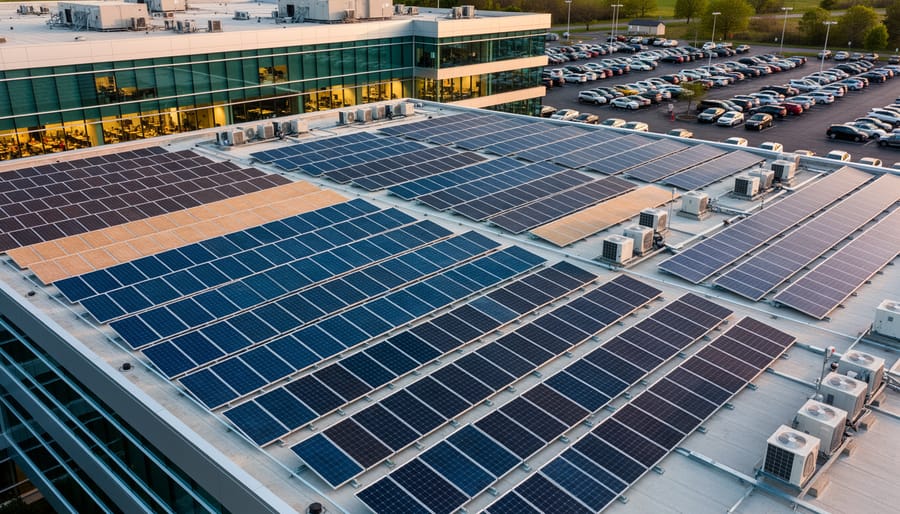
Commercial installations follow different logic. Larger roof areas mean efficiency matters less than durability, warranty coverage, and total cost per kilowatt installed. Commercial buyers often choose higher-wattage modules because fewer panels mean less racking, less labor, and faster installation. The panels themselves may not be more efficient, just physically larger.
Common Mistakes to Avoid When Buying Solar Panels
Choosing solar panels based solely on the lowest price is the most common, and costly, mistake homeowners make. Panels priced significantly below market average often come with lower efficiency ratings, shorter warranties, or unreliable manufacturers who may not honor their commitments over the system’s 25-year lifespan. You’ll end up needing more panels to meet your energy needs, negating any initial savings, or face replacement costs years earlier than expected.
Ignoring warranty terms is another critical oversight. While premium panels now offer 40-year warranties and most mainstream brands cap at 25 years, the fine print matters enormously. Some warranties cover only manufacturing defects, not performance degradation, while others require specific maintenance schedules or void coverage if you switch installers. Read the full warranty document before purchasing, and verify the manufacturer has a track record of honoring claims. A warranty is only as good as the company standing behind it.
Underestimating your energy needs leads to undersized systems that won’t deliver the savings you expect. Many buyers calculate based on current usage without accounting for future needs like electric vehicle charging, home additions, or HVAC upgrades. Review at least a full year of utility bills to capture seasonal variations, and consider working with an energy consultant to project realistic demand. Installing additional panels later costs significantly more than getting the capacity right initially.
Overlooking installer quality creates problems that outlast even poor panel choices. The best panels perform poorly when improperly installed, and cheap installation often means rushed work, substandard mounting hardware, or electrical connections that fail inspection. Research installers as thoroughly as you research panels, checking licenses, insurance, local references, and whether they employ certified technicians. The installer’s workmanship warranty should complement the panel manufacturer’s coverage.
Failing to verify compatibility with local conditions and regulations derails projects after purchase. Some panels perform poorly in high-heat climates despite strong efficiency ratings, while others can’t withstand heavy snow loads or salt air exposure. Additionally, homeowner association rules, local building codes, and utility interconnection requirements vary widely and may restrict certain panel types or installations. Before committing to any system, confirm it meets all applicable standards and will function optimally in your specific environment. Understanding the cons of solar energy for your particular situation helps you make realistic purchasing decisions rather than discovering limitations after installation begins.
The Growing Solar Market in 2026
The solar industry is experiencing unprecedented momentum. Approximately 5 million U.S. households now have solar panels installed, and the Solar Energy Industries Association projects that number will double by 2030. This rapid expansion reflects both growing environmental awareness and the improving economics of solar technology.
For buyers, this growth translates into tangible benefits. Increased competition among manufacturers has driven innovation while stabilizing prices. You can now find panels with efficiencies reaching 22.8% to 24.9% at the top end, performance levels that seemed ambitious just a few years ago. Installation costs have settled into a predictable range of $2.50 to $3.50 per watt before federal incentives, making it easier to budget accurately.
The maturing market also means better product availability and more installer options in most regions. Manufacturers are responding to demand with improved warranties, some premium tiers now offer 40-year coverage, and more reliable supply chains. You’re less likely to face months-long waits for specific panel models than in previous years.
This expansion brings challenges too. The sheer number of brands and models can overwhelm first-time buyers, which makes understanding efficiency ratings, warranty terms, and cost structures even more critical. As the market grows, distinguishing quality products from mediocre ones requires the informed approach outlined in this guide.
Frequently Asked Questions
Before committing to a solar panel purchase, you’ll likely have questions about costs, performance expectations, and what makes one system better than another. Here are answers to the most common questions homeowners and business owners ask when choosing panels.
How much do solar panels cost in 2026?
Installed solar costs typically range from $2.50 to $3.50 per watt before applying the 30% federal tax credit. For an average residential system, expect to invest between $15,000 and $25,000 before incentives, with final costs varying based on panel type, system size, and installation complexity.
What efficiency rating should I look for?
Top-tier residential panels now achieve 22.8% to 24.9% efficiency, representing the best performance available in 2026. For most homes, panels in the 20% to 22% range offer excellent value, while anything below 18% may require more roof space to meet your energy needs.
How long do solar panel warranties last?
Premium panels come with warranties stretching to 40 years, though most mainstream brands cap coverage at 25 years. These warranties typically guarantee that panels will maintain at least 80% to 85% of their original output by the end of the warranty period.
How many panels will I need for my home?
The number depends on your electricity consumption, available roof space, and panel wattage. A typical home uses 10,000 to 12,000 kilowatt-hours annually, requiring anywhere from 15 to 25 panels rated at 400 watts each, though your installer will calculate the precise number based on your specific usage patterns and local sunlight conditions.
Understanding the difference between panel types helps narrow your options. Monocrystalline panels dominate residential installations because they deliver the highest efficiency in limited roof space, making them ideal when you want maximum power output. Polycrystalline panels cost less but require more square footage for the same energy production. Thin-film options suit specialty applications where weight or flexibility matters, though they sacrifice efficiency.
Maintenance requirements are minimal. Panels need occasional cleaning to remove dust and debris, and you’ll want annual inspections to verify connections remain secure and performance stays consistent. Most systems require no other intervention during their 25-plus-year lifespan, making solar one of the lowest-maintenance home improvements available.
Choosing solar panels to generate electricity for your home or business comes down to balancing three core priorities: efficiency, warranty protection, and installer expertise. While upfront cost matters, it shouldn’t be your only consideration. A slightly more expensive panel with higher efficiency and a robust warranty often delivers better long-term value than a budget option that underperforms or requires replacement sooner.
The 2026 solar market offers more choices than ever, with top-tier residential panels now reaching efficiencies between 22.8% and 24.9%, and premium warranties extending up to 40 years. These advances mean you can generate more electricity from less roof space while protecting your investment for decades. However, even the best equipment won’t perform as promised if installed incorrectly. That’s why vetting your installer is just as critical as selecting quality panels.
With approximately 5 million U.S. households already benefiting from solar energy and adoption expected to double by 2030, you’re joining a growing movement toward sustainable power generation. At Solar Roofs, we’re committed to guiding you through every decision, ensuring you choose panels that match your energy needs, roof specifications, and budget. The right solar solution isn’t just about saving money today, it’s about investing in reliable, clean electricity for years to come.